
Traveler Brief: Travel,Adventure
This article covers details concerning Travel,Adventure. Sahan Tourism organizes complete guided trips, logistics, security details, and tour arrangements for the places detailed here.
What is Laas Geel?
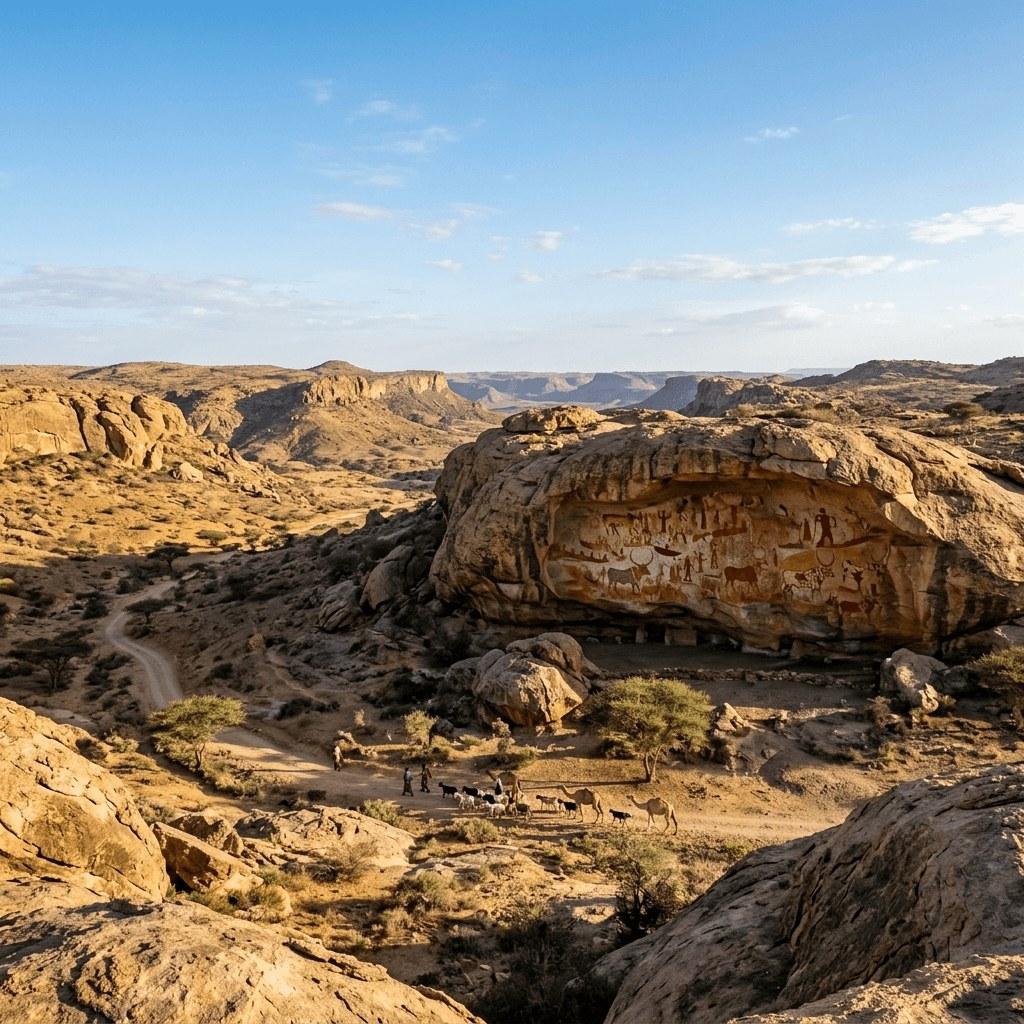
Laas Geel is a group of rock shelters in Somaliland, northern Somalia, whose walls are covered in some of the best preserved prehistoric paintings in Africa. The site sits on a granite outcrop about 55 km northeast of Hargeisa, close to the road to Berbera. The name means "the camels' watering place", because two seasonal rivers meet below the rocks and herders have watered their animals there for generations.
Local people always knew the paintings were there. They became known to the wider world in late 2002, when a French archaeological team surveying the region recorded them in detail. Since then, Laas Geel has become the best known heritage site in Somaliland and the stop most visitors to Hargeisa put at the top of their list.
How old are the paintings?
Researchers usually date the paintings to somewhere between 5,000 and 10,000 years ago, and the range is still debated. What is clear is that they were made by early pastoral communities, people who herded cattle in what was then a greener landscape. That makes Laas Geel one of the oldest records of livestock herding in the Horn of Africa.
What you will see
The paintings are spread across several shelters and overhangs on the same outcrop. Most visitors spend about an hour walking between them with a site guard. The main things to look for are:
- Cattle with long, curved horns. They are the main subject. Many wear what looks like a decorated robe or bib around the neck, which suggests they had ritual importance.
- Human figures. People stand beside or under the cattle, often with arms raised, which many researchers read as a ceremony.
- Other animals. You can also find dogs, antelope and a giraffe among the scenes.
- The colours. Reds, oranges, cream and white are still bright after thousands of years, because the overhangs protect them from sun and rain.
The climb to the higher shelters is short but uneven, so wear shoes with grip. The view from the top across the dry river beds is part of the experience.
How to get to Laas Geel
Laas Geel is a day trip from Hargeisa. The drive takes about one to one and a half hours, partly on paved road and partly on a rough track at the end. There is no public transport to the site, so visitors go with a driver and guide.
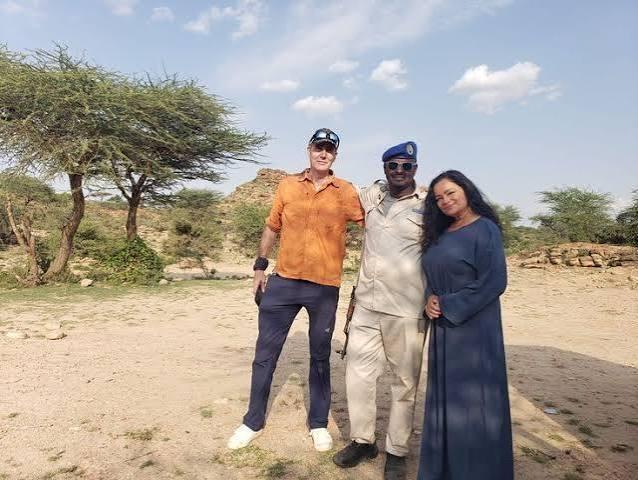
At the time of writing, foreign visitors leaving Hargeisa need a permit from the Somaliland tourism authorities and an armed escort from the Special Protection Unit. Rules can change, so check before you travel. When you book with Sahan Tourism, our team arranges the permit, escort, vehicle and guide for you. Read Is Somalia safe to visit? for our full view on security in the region.
Best time to visit
The cooler months from October to March are the most comfortable. Hargeisa sits on a high plateau, so mornings are mild for most of the year, but the walk between the shelters is exposed and the midday sun is strong. We suggest leaving Hargeisa early, reaching the site by 9 am, and being back in town for lunch.
See our best time to visit Somalia guide for the full picture by season and region.
What to bring
- Water and a snack, as there are no shops at the site
- A hat, sunscreen and sunglasses
- Closed shoes for the rocky path
- Cash for the site entrance fee and a tip for the guards
- Your passport and permit copies
Do not touch the paintings or use water or flash on them. Oils from hands and bright light damage pigments that have lasted for thousands of years.
Other rock art sites in Somaliland
Laas Geel is the most famous site, but it is not the only one. Somaliland has dozens of painted shelters, and two are worth adding if you have an extra day.
Dhagax Kure lies a short drive from Hargeisa. Its paintings are smaller and more faded than Laas Geel, but they show the same cattle and human figures, and you will often have the site to yourself. Because it is close to the city, it fits easily into a half day.
Dhambalin, in the hills between Sheikh and Berbera, was recorded by archaeologists in the late 2000s. Its shelters hold detailed paintings of cattle, other animals and human figures in a different style from Laas Geel. The road is rough, so it suits travellers who enjoy a longer drive.
Visiting more than one site helps you see how widespread this early herding culture was across the Horn of Africa. Our guides explain the links between the sites and the Somali pastoral way of life that still continues around them today.
Combining Laas Geel with Hargeisa and Berbera
Most guests combine Laas Geel with Hargeisa and the coast. Our most popular routes are:
- 2 days in Hargeisa and Laas Geel, the shortest option for travellers with little time
- 3 days: Hargeisa, Laas Geel and Berbera, adding the Red Sea port of Berbera and its old town
- 5 days: Hargeisa, Laas Geel, Berbera, Sheikh and Dhagax Kure, with the Sheikh mountains and a second rock art site
You can see every option on our Laas Geel tours page, and more about the region on our Somaliland destination page.
Frequently asked questions
Where is Laas Geel?
Laas Geel is in Somaliland, northern Somalia, about 55 km northeast of Hargeisa near the road to Berbera.
How old are the Laas Geel cave paintings?
Most estimates place them between 5,000 and 10,000 years old. They were made by early cattle herding communities.
Do I need a permit to visit Laas Geel?
Yes. Foreign visitors currently need a permit and an armed escort to travel outside Hargeisa. Sahan Tourism arranges both as part of the tour.
Can I visit Laas Geel in one day?
Yes. It is an easy half day trip from Hargeisa. Many guests add Berbera or the Sheikh mountains on the following days.
Export Itinerary & Planner Details
Save a copy of the travel details, budget estimates, and checklist details for this route directly to your device as a checklist report.